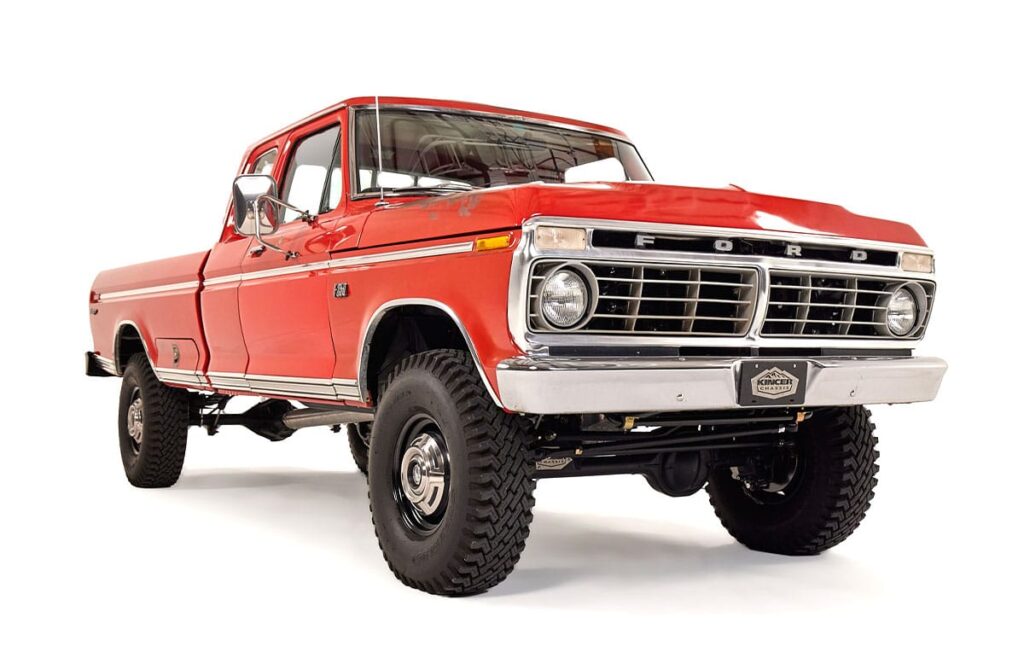

Pickup trucks and country music go together like tailgates and cold beer — and few brands have earned more real estate in country lyrics than Ford. Not because of sponsorship deals or radio payola, but because Ford trucks show up in real life — on dirt roads, in driveways, in driveways, parked behind the barn. And what shows up in real life shows up in country music.
A beat-up Ford in a country song isn’t just a truck. It’s a character. It carries memory, identity, hard work, and heartbreak. It’s the truck your daddy fixed up in the garage. It’s the one that wouldn’t start on the worst morning of your life. It’s the one you drove like a stallion even when everyone else could see it was falling apart.
Here’s a deep dive into the most iconic country songs that put a Ford pickup truck front and center — and the real stories behind why those lyrics hit so hard.
Why Ford Trucks Appear in Country Songs
It’s worth understanding why Ford specifically, and not just “a truck,” shows up in so many songs. A data analysis by Overthinking It found that Chevy actually edges out Ford in country lyrics by a ratio of roughly 3-to-1 — but the analysts note this is likely due to how the word sounds rather than any cultural preference. “Chevy” ends with an open vowel and slides off the tongue naturally. “Ford” ends with a hard consonant.
So when a songwriter specifically reaches for “Ford,” it’s a deliberate choice. It’s a specific truck. And specificity is the soul of great country songwriting. The 1964 short-bed your uncle bought new. The rusted-out ’74 with the fire-engine-red engine. The daddy’s Ford you pulled up in, slinging gravel on the front porch. Those aren’t generic trucks — and the songs aren’t generic songs.
1. “Drive (For Daddy Gene)” — Alan Jackson (2002)
If there is one country song that earns the title of the greatest Ford truck tribute in music history, this is it. Released in January 2002, “Drive (For Daddy Gene)” is Alan Jackson’s deeply personal tribute to his father, Eugene “Daddy Gene” Jackson, who passed away on January 31, 2000.
The Ford truck at the center of the song is a real vehicle: a half-ton short-bed Ford his uncle bought new in 1964. Jackson recalls his father fixing up the truck — working through a smoking engine and a couple of burnt valves — and then letting a young Alan drive it down a dirt strip called Thigpen Road to haul off trash. Two hands on the wheel, feet stretching to reach the pedals, feeling like Mario Andretti on a back road in Georgia.
As Music Mayhem Magazine details, Jackson wrote the song after his father died, wanting to capture something real and specific about the man and the memories they shared. The result is a song that is simultaneously about a truck, a boat, and a father — and ultimately about the way love gets passed down through the ordinary moments of a life together.
The song hit No. 1 on the Billboard Hot Country Singles chart in May 2002 and was later ranked No. 52 on Rolling Stone’s 200 Greatest Country Songs of All Time. The music video won Video of the Year at the 2002 ACM Awards. And that old hand-me-down Ford with three-speed on the column and a dent in the door? It became one of the most beloved trucks in country music history — without ever leaving Georgia.
2. “Take It Easy” — The Eagles (1972)
Technically a rock song, but “Take It Easy” lives in the DNA of country music — and the Ford truck at its center is arguably the most famous vehicle in the history of American popular music, full stop.
The line: “It’s a girl, my Lord, in a flatbed Ford, slowin’ down to take a look at me.”
According to the song’s history on Wikipedia, Jackson Browne began writing the song after his car broke down in Winslow, Arizona on a road trip to Sedona. His neighbor Glenn Frey — living in the same Los Angeles apartment building — helped finish the unfinished second verse, contributing the unforgettable image of the girl in the flatbed Ford. That single contribution earned Frey co-writing credit on one of the Eagles’ most enduring songs.
The flatbed Ford’s cultural impact didn’t stop at the song. In 1999, the city of Winslow, Arizona erected the Standin’ on the Corner Park — complete with a life-size bronze statue, a two-story mural depicting a woman in a red flatbed Ford pickup, and an actual flatbed Ford truck permanently parked on the corner. The park helped revitalize a downtown that had been economically gutted when Interstate 40 bypassed the city in 1979. A Ford truck written into a song saved a town. That’s the power of the right lyric.
Travis Tritt later covered “Take It Easy” for the 1993 Eagles tribute album Common Thread — a version so beloved it famously led to the Eagles’ first reunion in 13 years.
3. “Two Pink Lines” — Eric Church (2006)
Before Eric Church became country music’s reigning outlaw, he was crafting tightly written story songs like this one — and the daddy’s Ford in its opening verse does exactly what a great country lyric should: it tells you everything about the narrator in a single image.
“She was pacing back and forth on her front porch. I pulled up slinging gravel in my daddy’s Ford.”
Ford-Trucks.com highlights the moment as one of the most cinematically vivid Ford references in country music. A young man, borrowing his father’s truck, showing up to a conversation that will change his life. The truck signals class, region, and character all at once — without ever being described beyond the fact that it’s a Ford and there’s gravel flying.
4. “Redneck Roses” — Tracy Byrd
This one is quiet and lovely and built entirely around the image of a man in a beat-up Ford pulling over to the side of the road. As Ford-Trucks.com describes it, the man steps out of that old beat-up Ford he drives, picks wildflowers from the ditch, and brings them home to his country girl. They called them redneck roses. They didn’t cost a dime. And they always put a smile on her face.
The beat-up Ford is the whole point. A shinier, newer truck would make the gesture mean something different — or nothing at all. The truck has to be old and beat-up, because the man driving it is someone who doesn’t have much but gives everything he has. The Ford and the wildflowers say the same thing.
5. “Tail on the Tailgate” — Neal McCoy
Neal McCoy didn’t just mention a Ford truck in a lyric — he dedicated an entire song to one specific vehicle: a 1974 Ford, rusted out and beat up, with a fire-engine-red engine. The lyric documented by F150Online: “’74 Ford truck, rusted out an’ beat up. Fire-engine red, been a part of the family for years.”
McCoy traces the truck’s family history — his brother teaching him how to drive it — before arriving at the song’s centerpiece: using that tailgate as a dance floor on a Friday night, with corn-fed girls and no reason to be anywhere else. It’s the truck as time machine. The rusted-out ’74 doesn’t just go places — it carries you back to who you were when you first got behind the wheel.
6. “Beat Up Old Ford” — Jack Ingram
Texas troubadour Jack Ingram turned the beat-up Ford into a life philosophy with this fan-favorite track. The wisdom passed down in the song is as good as any lyric country music has produced on the subject of how to carry yourself when you don’t have much: “You gotta have a good imagination if you’re gonna live the life of old — you’ve got to drive that Ford like it’s a stallion.”
Ford-Trucks.com calls it one of the most wisdom-rich Ford references in country music — a song about dignity and pride, about choosing how you carry yourself regardless of what you’re driving or what you own. Drive the beat-up Ford like it’s a stallion. That’s country music philosophy in a single line.
7. “Good Directions” — Billy Currington (2007)
Billy Currington’s charming story-song about a small-town boy and a lost city girl contains one of the most endearingly self-aware Ford references in the catalog. The line Ford fans have quoted for years: “I knew my old Ford couldn’t run her down.”
He knows his limitations. He knows his truck’s limitations. The old Ford can’t catch a fast car — but somehow, the city girl comes back anyway. In country music, the old Ford always has the last word.
8. “Where I’m From” — Jason Michael Carroll (2007)
Jason Michael Carroll’s love letter to small-town America contains one of the most values-laden Ford references in the genre. The lyric F150Online fans have championed: “Where the quarterback dates the homecoming queen, the trucks are Ford and the tractors are green, and a man’s word means everything.”
In that single line, Ford becomes a moral signifier. It’s not what you drive — it’s what you stand for. Ford trucks and a man’s word, placed side by side like they belong together. That’s country music’s relationship with this brand in a nutshell.
9. “My Kinda Party” — Brantley Gilbert (Original Version)
This one comes with a footnote that Ford fans have never forgotten. As documented by Ford Truck Enthusiasts, Brantley Gilbert’s original recording of “My Kinda Party” included the lyric: “Oh baby, you can find me in the back of a Ford truck tailgate.” When Jason Aldean later recorded a version of the song for his own album, he changed the line to the generic “back of a jacked-up tailgate” — scrubbing the Ford name entirely.
Country music fans have opinions about many things. The removal of that Ford lyric is one of them. The original Brantley Gilbert version remains the definitive one in the eyes of Ford truck loyalists.
10. “Hillbilly Bone” — Blake Shelton ft. Trace Adkins (2010)
Blake Shelton’s boot-stomping hit “Hillbilly Bone” earned a dedicated place in Ford Nation for one specific lyric moment. F-150 Forum members report cranking up the radio every time the F-150 mention rolled around in the song — turning it up loud enough to make sure no one in the surrounding trucks missed it. It’s the kind of fleeting reference that lands with the precision of a well-thrown dart: short, specific, and unforgettable to the right audience.
Bonus: Alan Jackson’s Ford Legacy Beyond the Songs
No conversation about Ford trucks in country music is complete without acknowledging that Alan Jackson isn’t just a songwriter who happened to mention a Ford — he’s a genuine, lifelong Ford man. Billboard has documented that Jackson appeared in an official Ford Trucks television commercial performing a reworked version of “Mercury Blues” — with the classic line “crazy ’bout a Mercury” swapped out for “Crazy ‘Bout a Ford Truck.” The partnership felt natural because it was natural. Nobody made Ford sound more like home than Alan Jackson. He didn’t need a brand deal to make you believe it.
The Ford Truck in Country Music
What makes the Ford pickup truck such a powerful image in country music isn’t the brand itself — it’s what the brand represents in the hands of a great songwriter. It’s the hand-me-down vehicle that carries three generations of a family’s stories. It’s the truck that won’t start on the worst morning of a man’s life. It’s the beat-up old thing you drive like a stallion because your dignity doesn’t depend on what’s under the hood.
Country music has always been about specificity — about naming the exact truck, the exact road, the exact feeling of pressing a clutch with your feet barely reaching the pedals while your daddy tells you you’re doing just fine. The Ford truck earns its place in those songs not because it’s the most popular brand or the most lyric-friendly word, but because it lives in the real lives of the people who write and love this music.
And every time one of these songs comes on the radio — in a beat-up Ford, of course — that’s exactly what it sounds like.