
Thomas Rhett is one of country music’s most successful and easygoing stars — but behind the hits, his family has quietly navigated something far heavier. As the father of a Black daughter in a genre still wrestling with its own history on race, Rhett has spoken openly about the racism his family has faced, and in doing so, shined a light on a much bigger conversation within the country community.
Here’s the story of Rhett’s family, the prejudice they’ve encountered, and the ongoing reckoning around race in country music.
Thomas Rhett’s Blended Family
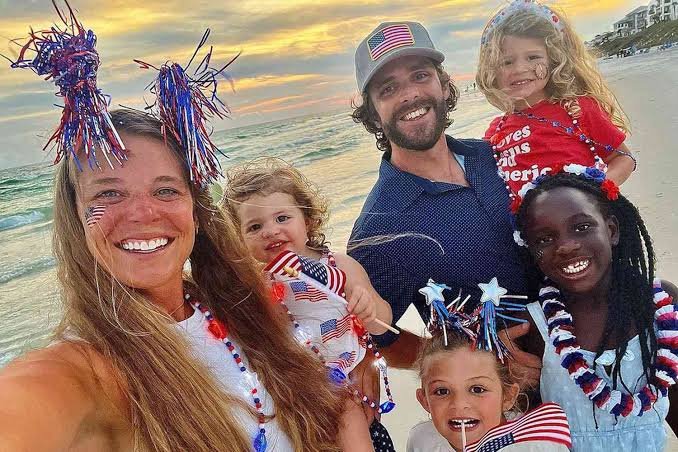
In 2017, Thomas Rhett and his wife Lauren Akins brought home their first daughter, Willa Gray, whom they adopted from Uganda. Lauren first met Willa in 2016 during a trip with the nonprofit 147 Million Orphans, and by her own account, felt an instant, electric bond. The adoption was finalized about a year later — and just months after Willa came home, Lauren gave birth to their daughter Ada James, followed later by Lennon Love.
That makes the Akins household a multiracial, blended family: a Black daughter and white daughters being raised side by side. It’s a family the couple has always spoken about with immense pride — and one that has occasionally drawn the ugliness of racism to their doorstep.
Speaking Out Against Racism
In the summer of 2020, amid the national reckoning that followed the death of George Floyd, Rhett broke from his typically apolitical public persona to address the issue head-on. In an Instagram post paired with a passage of scripture, he described himself as “the father of a black daughter and also two white daughters” and admitted he’d struggled with what to say.
Rhett revealed that his family had navigated forms of racism directly. While the overwhelming response to their family had been love and support, he acknowledged that sometimes it was the opposite — and that fear of backlash can make silence the easier choice. This time, he chose to speak, declaring that he stood with his wife, his daughters, and everyone who has faced racism.
Lauren echoed the sentiment, sharing her own vulnerability. She admitted she’d been nervous to speak out because some people believe a white mother is undeserving or incapable of raising a Black daughter. She vowed to be a mother who fights for Willa and every person who shares her skin — raising her to be proud of who she is.
Raising Willa Gray to Embrace Who She Is
Beyond the headlines, Rhett and Akins have been candid about the everyday work of raising a Black child in a world that isn’t always kind. Rhett has shared that Willa, even at a young age, noticed her family “looks a lot different” from other families.
Their approach has been to lead with pride and love. The couple has said their core message to their kids is to shine their light everywhere they go — to recognize that the world can be cruel, but that cruelty doesn’t have to be passed on. For the Akins family, adoption and celebrating Willa’s heritage aren’t side notes; they’re central to who they are.
A Bigger Issue Within the Country Community
Rhett’s family experience doesn’t exist in a vacuum. It intersects with a genre that has long grappled with questions of race — and the discomfort runs deep.
Country music’s racial tensions trace back nearly a century. In the 1920s and ’30s, the industry marketed music by Black artists as “race records” and music by white artists as “hillbilly records,” a division that helped cement the perception of country as white music for a white audience. Yet the genre’s DNA is undeniably shaped by Black musicians — from the banjo’s African origins to the blues and gospel foundations beneath so many country standards. Pioneers like Charley Pride, DeFord Bailey, and Linda Martell were part of the story from early on.
Despite that history, studies of the modern industry have found that Black and other artists of color remain sharply underrepresented on major label rosters and among awards nominees — a gap that advocates argue the industry has been slow to close.
Flashpoints and Progress
The conversation has boiled over repeatedly in recent years. A 2021 incident in which Morgan Wallen was recorded using a racial slur sparked industry-wide soul-searching. In 2023, hit songs from Jason Aldean and Luke Combs reignited debate about race and symbolism in the genre. And in 2024, Beyoncé’s Cowboy Carter thrust the discussion into the global spotlight, prompting a fresh reckoning with country’s Black roots — and a mixed reception that itself became part of the story.
There has also been real momentum. Black artists including Kane Brown, Darius Rucker, Mickey Guyton, Jimmie Allen, and Shaboozey have found mainstream success, while organizations like Black Opry work to spotlight and support country artists of color. Both the Academy of Country Music and the Country Music Association launched diversity initiatives, even as critics argue that meaningful change has been uneven. It’s a genre visibly in the middle of working something out — with progress and pushback happening at the same time.
Thomas Rhett’s willingness to speak about the racism his family has faced put a deeply personal face on a systemic issue. His daughters are growing up in a world — and a genre — still working through hard questions about race, belonging, and who country music is really for.
What Rhett and Akins model is simple but powerful: meeting hate with love, and raising their children to be proud of exactly who they are. As country music continues its own reckoning, that message feels more relevant than ever.