
Everybody knows that concert tickets are not cheap. But the ticket is only one piece of the puzzle, and for most fans it is not even the most surprising one. The real sticker shock happens when you add up the fees, the parking, the food, the drinks, and the inevitable merch table stop on the way in. By the time you factor all of it in, a night at a country concert in 2026 can cost anywhere from around $100 for a frugal night at a smaller show to well over $600 per person for a stadium show with decent seats and a couple of rounds at the bar.
This article breaks it all down honestly, category by category, at every level of the country touring landscape, from a rising artist playing a club or amphitheater to a Morgan Wallen or Zach Bryan stadium show. No fluff, no vague estimates. Just real numbers so you can actually budget for your night.
The Ticket: What You Are Actually Paying in 2026
The ticket price is where everything starts, and where the gap between different tiers of country concerts is most dramatic.
The average concert ticket price in 2025 reached approximately $135, representing a 75 percent increase from 2015 and a 20 percent jump from pre-pandemic levels, according to industry data compiled by SimpleHas. That average covers all genres and venue sizes, so country-specific prices vary considerably depending on the artist and the venue type.
Here is how ticket prices actually break down across the country touring landscape in 2026:
Small club and bar shows, for artists like emerging acts playing venues under 1,500 capacity, typically start at $20 to $45. These are the shows at places like Joe’s on Weed Street in Chicago, smaller amphitheaters, and mid-sized markets. No-frills entry, great intimacy, and often the best bang for your dollar in live country music.
Mid-level amphitheater shows, covering artists touring amphitheaters and arenas in the 5,000 to 20,000 seat range, typically land between $55 and $150 for standard tickets. You will find artists like Riley Green, Megan Moroney, Cody Johnson, and Bailey Zimmerman in this tier in 2026. Lawn seats at a place like Ruoff Music Center or PNC Bank Arts Center are often in the $55 to $85 range. Pavilion seats push into the $100 to $150 territory.
Major touring headliners at arenas and amphitheaters, which covers artists like Chris Stapleton, Luke Bryan, and Luke Combs in non-stadium configurations, typically run $80 to $250 depending on the section and the market.
Stadium shows, the top tier of country touring in 2026, are where prices get truly eye-opening. Morgan Wallen’s Still The Problem Tour, which runs through August 2026, has seen tickets in the lower sections of venues like U.S. Bank Stadium and Michigan Stadium priced at over $1,000 per seat on the secondary market. Even the first rows of the upper sections have been listed at $500. Fans who caught the initial primary sale got in for a wider range, with some general admission field options in the $150 to $250 range, but resale prices have driven overall averages much higher. Zach Bryan’s With Heaven on Tour, running through October 2026, carries similar dynamics at his stadium and large amphitheater stops.
One fan on social media summed up the Morgan Wallen pricing situation bluntly: “$600 each for half decent seats. How do people afford to go to concerts?” Another noted that “$800 tickets for the last row” is where venues lose people entirely.
For fans willing to be patient, some experienced concertgoers recommend waiting until the week of the show, when unsold inventory sometimes reappears at prices significantly lower than the initial on-sale rush.
See current country concert ticket prices across all touring artists at https://seatgeek.com/concert-tickets/country
The Fees: The Cost Nobody Talks About Until Checkout
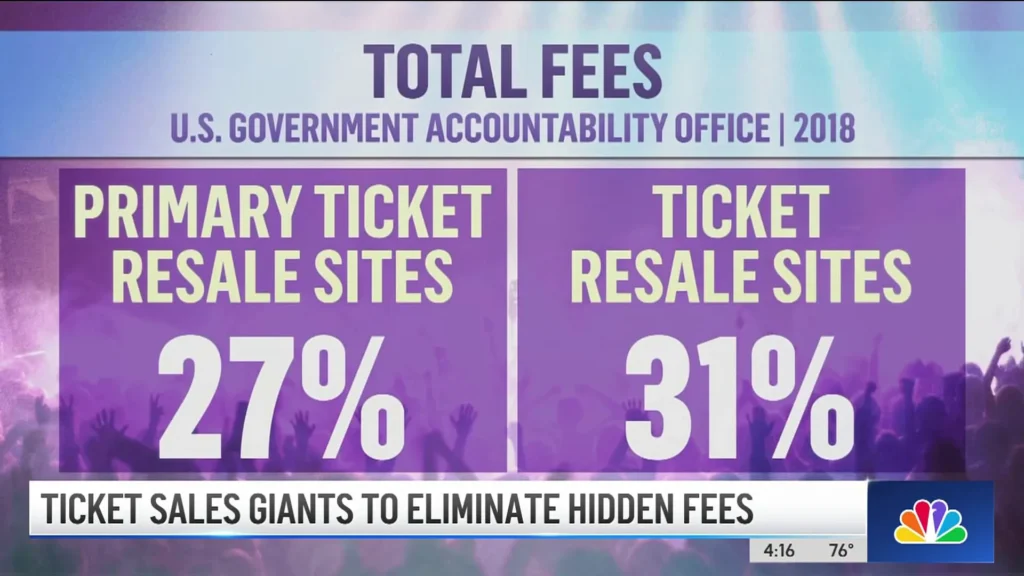
This is the number that catches most fans off guard. Ticketing fees in 2026 are not a minor add-on. They are a substantial additional cost that can push a $100 ticket to $130 or $140 before you even get to anything else.
Industry data indicates that service fees now add approximately 32 percent on top of base ticket prices on average. That means a $100 face-value ticket realistically costs $130 to $140 after all fees are applied. A $200 ticket becomes $260 to $270. A $400 ticket can cost $520 or more by the time you click confirm.
The fee categories you will encounter include service fees, order processing fees, facility charges, and sometimes delivery fees for digital tickets that cost money to send to your phone. Many of these are not optional and are not shown until the final checkout screen, which is why so many fans feel blindsided.
Some no-fee or low-fee platforms like TickPick advertise a flat pricing model where the price you see is close to the price you pay. Worth checking for your specific show before defaulting to the first ticketing site you find.
Parking: $20 to $50 Depending on Where You Park
Parking is a fixed cost that most fans simply accept, but the range is wide enough to matter in your budget.
At stadium and large amphitheater shows in 2026, official venue parking typically runs $30 to $50 per car. Gillette Stadium in New England charges $50 for prepaid parking on the stadium side. Concert venue parking in Nashville at Nissan Stadium goes for around $40 per car for pre-purchased passes. A major amphitheater that newly started charging for parking in 2026, Credit Union 1 Amphitheatre in Tinley Park, Illinois, charges $20 for advance general parking, $25 at the gate, and $50 for premier parking.
For fans willing to walk or use transportation apps, parking costs can be significantly reduced. Private lots near major venues accessed through apps like SpotHero often run $10 to $25 less than the official venue lots, with the tradeoff being a longer walk. Rideshare drop-off eliminates parking entirely, though you will pay surge pricing on the way home when thousands of fans are all requesting rides at the same time.
A conservative estimate for parking at a mid-level to major country show is $30 to $50 per car. Split between two or more people, this cost becomes much more manageable.
Food and Drinks: Where the Night Gets Expensive Fast
This is the category that surprises fans the most, particularly those who have not been to a large outdoor concert venue in several years. Venue food and drink pricing in 2026 is aggressive.
Beer at a stadium or large amphitheater typically runs $12 to $16 for a domestic draft or can. This is consistent with what fans pay at NFL stadiums, where prices ranged from $6.80 at the cheapest venues to $16.49 at the most expensive in 2025, with a national average around $10 to $12. Country concerts at NFL stadiums during the summer follow similar pricing, as the concession stands are operated by the same vendors. At venues like Allegiant Stadium in Las Vegas, where Morgan Wallen plays on his 2026 tour, beer prices regularly hit $14 to $15.
A burger or hot dog at a major venue runs $15 to $20. A bottle of water is $5 to $8. A specialty cocktail, which are increasingly popular at amphitheater shows, can run $18 to $22. If you eat dinner at the venue and have three or four drinks over the course of a three-hour show, spending $80 to $120 per person on food and beverage alone is completely realistic. If you are budget-conscious, eating before you arrive and limiting yourself to one or two drinks can bring this number down to $25 to $40.
The math gets harder when you are attending a show where the gate does not open until 7:00 PM and the headliner does not take the stage until 9:30 PM. Two and a half hours of waiting with a beer in hand at $14 per round adds up before the music even starts.
Merchandise: $40 to $100+ Depending on What You Buy
The merch table is optional but psychologically hard to resist, particularly when you have traveled a distance to see your favorite artist and a tour-specific item exists that you cannot get anywhere else at that moment.
The average concert t-shirt in 2025 and 2026 costs between $35 and $50 for a standard tee, based on industry data from concert merchandise tracking platforms. Hoodies have risen from around $30 in the early 2000s to $70 or more at major tours today. Limited edition items, collaboration pieces, and premium items like tour-exclusive hats or jackets can run $50 to $100 and beyond.
Country music merchandise spending is up 31 percent year over year in 2025, according to fan spending data from concert merchandise analytics platform atVenu, one of the sharpest increases of any music genre. That increase reflects both rising prices and growing enthusiasm among country fans who treat tour merchandise as a genuine collectible rather than a simple souvenir.
If you budget for a t-shirt and a hat, plan on spending $60 to $100. If you leave the merch table with restraint, $40 to $50 covers a solid shirt. If you go all-in on a hoodie and a few smaller items, $120 to $150 is realistic at a major tour.
Transportation Beyond Parking: The Hidden Variable
For fans who are not local to the venue, transportation costs extend beyond the parking lot. If you are driving more than an hour to a show and plan to drink, a hotel room needs to factor into the total cost. Budget hotels near major concert venues in 2026 start around $100 to $150 per night in most markets, but event-night pricing can push that to $200 or more if you book late. Splitting a room with a friend cuts that in half.
Rideshare costs from hotel to venue and back are typically $20 to $40 each way depending on the city and surge pricing at show end. Budget $40 to $80 for round-trip rideshare if you are relying on it for the full night.
Gas for the drive is an additional variable. A 100-mile round trip at current gas prices adds roughly $15 to $25 to the total depending on your vehicle’s fuel efficiency.
The All-In Total: What a Country Concert Actually Costs in 2026
Here is the honest summary broken down by scenario, per person, assuming you are splitting a car and splitting a parking spot:
Budget night at a smaller country show, rising artist at a club or small amphitheater: Ticket with fees $40 to $65, parking split $10 to $15, two drinks $25 to $30, no merch. Total: $75 to $110 per person. This is the best value in live country music and often the most memorable experience, since you are close to the stage and the show feels personal.
Mid-level amphitheater show, lawn or pavilion seats: Ticket with fees $85 to $175, parking split $15 to $25, two or three drinks and a snack $50 to $70, one merch item $40 to $50. Total: $190 to $320 per person. This is the most common country concert experience in 2026 and represents the typical night out for a fan seeing someone like Megan Moroney, Luke Bryan, or Cody Johnson.
Major arena or large amphitheater headliner, reserved seats: Ticket with fees $130 to $275, parking split $20 to $30, three drinks and dinner at venue $80 to $100, merch $50 to $75. Total: $280 to $480 per person. This is the Stapleton or Luke Combs tier, where the experience is polished and the costs reflect it.
Stadium show, Morgan Wallen or Zach Bryan level: Ticket at primary sale with fees $175 to $350 for reasonable seats, parking split $20 to $30, three to four drinks and food $90 to $120, merch $50 to $100. Total: $335 to $600 per person at primary sale prices. At resale prices for the same show, add another $150 to $500 to the ticket line alone, pushing the all-in total to $500 to $1,000 or more per person.
Tips for Reducing the Total Cost Without Sacrificing the Experience
Buy tickets at primary sale the moment they go on sale. Resale prices at the top tier of country touring in 2026 can be three to five times face value. Joining artist fan clubs or presale email lists is the most reliable way to access tickets before the general public.
Eat before you arrive. A full meal outside the venue before you go in cuts $20 to $40 off the food line without affecting your enjoyment of the show in any meaningful way. You will still want a drink or two inside, but you will not be hungry enough to pay $18 for a venue burger.
Use rideshare or public transit. Eliminating parking saves $30 to $50 per car and means you can drink freely without logistical complications on the way home. At stadium shows where ride-sharing is widely used, the drop-off and pickup zones are usually well organized.
Set a merch budget before you walk in. Deciding on a spending limit of $40 or $60 before you see the merch table is far more effective than trying to make that decision while standing in front of it with adrenaline from the opener’s set still in your system.
Wait for the week-of ticket drop. At some major shows, unsold or released inventory reappears at closer to face value in the week before the event. This strategy requires flexibility and willingness to accept that tickets might not materialize, but it has worked for experienced concert-goers consistently enough to be worth knowing about.
Go see the opener’s headliner. If a rising artist you enjoy is headlining their own small tour rather than opening for a stadium act, catching them at that level is often a fraction of the cost of a stadium show and a genuinely superior live experience in terms of energy and intimacy.
The Bottom Line
A country concert in 2026 costs what you make it cost, but you have to be honest with yourself about what you are actually signing up for. A budget night at a small show can absolutely be done for under $100. A mid-tier amphitheater night for two people, realistically, costs $400 to $600 total once you add everything up. A stadium show for two people at primary sale, done properly, runs $700 to $1,200 all-in. At resale prices for the hottest tours, the sky is the limit.
None of this means the experience is not worth it. Live country music in 2026 is as good as it has ever been, and a Morgan Wallen stadium show or a Zach Bryan amphitheater performance is a legitimately extraordinary experience. But walking in with accurate expectations about what the night will cost is what separates fans who have a great time from fans who spend the drive home doing math in their heads and feeling vaguely betrayed.
Now you know the real numbers. Budget accordingly and enjoy the show.
For current ticket prices on all 2026 country tours, visit https://seatgeek.com/concert-tickets/country and https://tasteofcountry.com/country-music-tours/