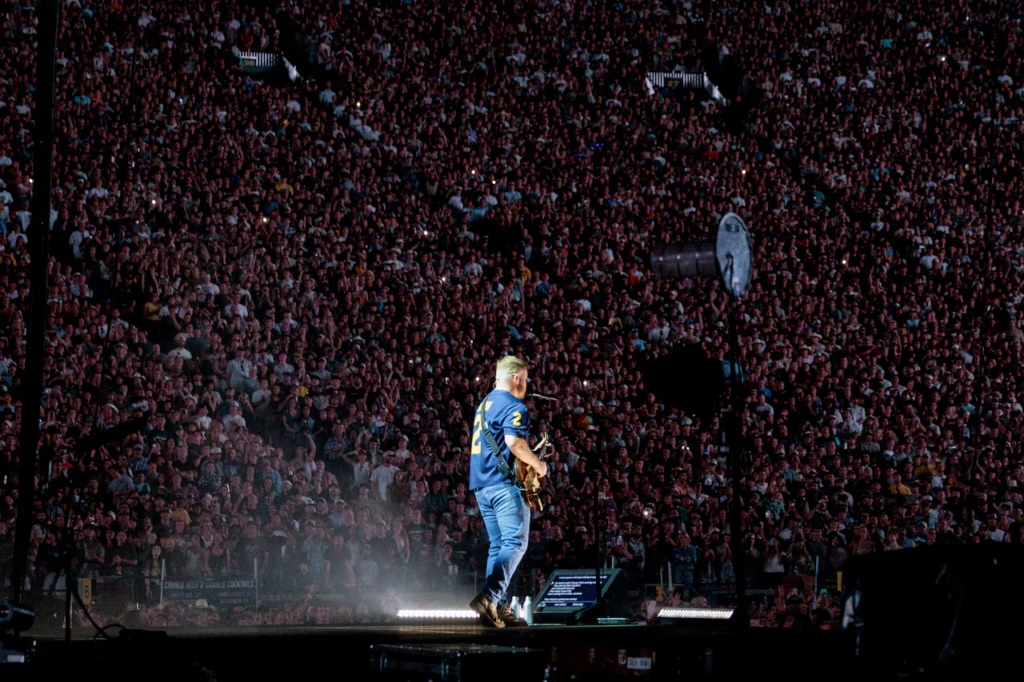

This is one of the most common questions fans face when buying tickets to a country concert, and it is genuinely more complicated than most ticketing guides let on. The difference between floor seats, a GA pit, GA standing, reserved pavilion, and lawn seating is not just about proximity to the stage. It is about your entire experience of the night, and what matters most to you personally. The right answer is different for a 22-year-old superfan who wants to touch the stage versus a couple celebrating a birthday who just wants a great view and an easy bathroom break.
This guide breaks down every seating category at country shows in 2026, what each one actually costs, what you actually get, and for which type of concertgoer each option makes the most sense.
First, Let’s Define the Terms: What Are You Actually Buying?
Before comparing the options, it helps to understand exactly what each ticket category means at a country concert, because the terminology varies by venue and tour and can be confusing even for experienced fans.
GA Pit or GA Floor is a standing-room-only area directly in front of the stage, with no assigned spots. You enter, you find a position, and you hold it for the night. First come, first served. This is the closest you can get to the artist, and it is also the most physically demanding option.
Reserved Floor Seats are assigned chairs placed on the venue floor, typically in sections lettered A, B, C, and so on from the stage outward. You have a specific row and seat number. These are elevated in price over almost everything else in the building, but you have a guaranteed spot and can sit between songs.
Pavilion Seats are covered, assigned seats at amphitheaters located between the floor and the lawn. These offer a protected, comfortable experience with solid sightlines and some of the best sound in the venue, and they represent the middle ground between cost and experience.
Lawn Seats or General Admission Lawn are open, uncovered areas at the rear of amphitheaters. You pick your own spot, there are no assigned positions, and the experience is relaxed and social. Sound quality and sightlines vary based on how far back you end up.
Upper Bowl or Nosebleed Seats at stadiums and arenas are the highest, furthest sections from the stage. These offer the widest overall view of the production and stage design but the smallest view of the artist themselves.
VIP Packages typically bundle a premium ticket with early entry, access to a pre-show reception or lounge, sometimes a merchandise item, and occasionally a soundcheck viewing opportunity.
The Price Reality in 2026
Before weighing the experience, you need to understand what each option actually costs at a major country show in 2026, because the gaps between tiers have grown dramatically.
At a Morgan Wallen stadium show in 2026, fans who saw ticket pricing during the presale reported GA Pit options approaching $900, lower reserved floor sections exceeding $1,000 on the secondary market, lower bowl seats in the 100 level running $1,200 or more on resale, and upper sections in the 300 level still running approximately $350. Those numbers reflect secondary market pricing, which has become the reality for the hottest country tours because most tickets move into resale channels quickly.
At a Zach Bryan stadium or large amphitheater show, pricing follows similar patterns. GA Pit tickets have been documented at $500 to $700 on the secondary market, with floor sections in the $300 to $600 range and upper sections starting around $150 to $250.
At mid-tier tours, amphitheater pavilion seats for artists like Megan Moroney, Riley Green, or Cody Johnson in 2026 typically run $85 to $175 at primary sale, with lawn tickets often available in the $50 to $85 range. GA Pit at this level might add $30 to $75 over standard floor pricing.
At smaller club and bar shows, there is often no seating distinction at all. You pay one price, you get in, and you find your spot. This is where the floor versus GA distinction essentially disappears.
The Case for General Admission: Why the Standing Section Wins for Some Fans
For a specific type of country fan, GA is not just acceptable. It is the preferred option, and they would not trade it for anything else in the building.
Here is what you actually get in a GA pit or GA standing floor area at a country concert. You get the closest possible physical proximity to the artist. At a Zach Bryan show, pit tickets put you close enough to see his expression during “Something in the Orange.” At a Morgan Wallen show, you are within shouting distance of the stage. That physical nearness creates a type of emotional intensity that no reserved seat in the upper bowl can replicate, no matter how good the sightlines are.
You also get the highest-energy crowd at the show. GA areas draw the most committed fans, and the collective energy of thousands of people singing every word in close quarters is its own form of entertainment. When a song like “Whiskey Glasses” or “I Remember Everything” starts and the entire GA floor erupts, you are not watching a concert. You are inside it.
GA is also typically the better deal per dollar of closeness when compared to reserved floor sections. A GA pit ticket at $200 primary sale puts you closer to the stage than a reserved floor seat at $350, because reserved floor seating begins several rows back from the GA barrier while the pit fills the space immediately in front of the stage.
The downsides of GA are real and worth naming directly. You must arrive very early if proximity matters to you. At major country shows with sold-out GA sections, the doors-open rush to claim positions near the barrier begins immediately, and arriving 30 minutes after doors will put you many rows deep in a packed crowd. If you are under 5’6″ tall, you will likely have someone blocking your sightline for most of the show. The crowd can push and shift, particularly during high-energy songs. There are no seats, which means standing for three or more hours including the opener’s set and changeover time. Getting to the bathroom or the bar means giving up your position, potentially permanently.
For a first-time concertgoer, GA can be genuinely overwhelming. One reviewer of a Zach Bryan GA pit experience noted they spent over $1,000 all-in including two GA pit tickets, gas, food, and parking, and came away feeling the sound quality was poor and the crowd was too tight. That is not a universal GA experience, but it is a real one, and it reflects what happens when the combination of a large stadium, dense crowd, and the physical demands of standing GA collide for someone who was not expecting it.
GA works best for superfans who have been to multiple concerts before, are physically comfortable standing and moving for extended periods, are willing to arrive early enough to secure a strong position, know the full setlist and want to be in the middle of the crowd energy for every song, and are attending with a group willing to stay together rather than making individual drink runs.
The Case for Reserved Floor Seats: Why Assigned Seating Earns Its Price Tag
Reserved floor seats at a country concert are the most expensive option in the building at most major tours, and the honest question is whether the premium is justified. The answer depends heavily on what you value.
What reserved floor seats give you is a guaranteed position. You know exactly where you will be standing before you walk through the gate. You can arrive closer to show time without losing your spot. You can go to the bar between sets and come back to your seat. If you need a moment to sit, your folding chair is right there. There is no crowd-management anxiety, no territorial position-holding, and no gamble on where you end up.
Reserved floor sections at amphitheaters and stadiums are typically positioned behind the GA pit, starting three to eight rows back from the pit barrier depending on the venue configuration. This means you are close to the stage but not in the tightest, most compressed part of the floor. For country shows with elaborate stage production, including the kind of runway extensions and in-the-round elements that artists like Morgan Wallen have incorporated into recent tours, reserved floor seats at the sides can actually offer better sightlines to certain parts of the stage than pit tickets that put you directly in front of one section.
The sound in reserved floor sections is generally good, though audiophiles note that the absolute best sound in most venues is actually mid-level center sections where the house sound system is tuned to project. Close proximity to the speaker stacks in a floor section can make sound feel loud and uneven rather than balanced.
The primary argument against reserved floor seats is the price relative to the experience. At a Morgan Wallen stadium show in 2026, paying $1,000 or more for a reserved floor section on the secondary market is a genuinely hard value proposition to justify when upper bowl seats at $350 give you a view of the full production and perfectly adequate sound. The marginal gain in proximity at floor level over lower bowl seating is real, but whether it is worth two to three times the cost is a deeply personal calculation.
Reserved floor works best for fans attending with a mixed group where some members have mobility considerations, older concertgoers who want the full floor experience without the physical demands of standing GA, date nights where the experience needs to be predictable and comfortable, and fans who plan to have drinks and want to move freely without losing position.
Amphitheater Specific: The Pavilion and Lawn Debate
At amphitheater shows, which represent the most common venue type for country artists from the mid to major tier in 2026, the comparison shifts. Here the primary choice is often between a covered pavilion seat, an uncovered reserved lawn chair area, and the general admission lawn.
Pavilion seats at amphitheaters are among the best-value concert seats in country music. At venues like Ruoff Music Center in Indiana, Dos Equis Pavilion in Dallas, or Riverbend in Cincinnati, the covered pavilion sections offer clear sightlines, some of the best sound in the venue thanks to the speaker delay towers positioned throughout, and reliable weather protection. For a mid-level country headliner, pavilion seats in the $85 to $150 range represent a sweet spot that gives you a comfortable, guaranteed experience without paying floor premiums.
The GA lawn at an amphitheater is the best budget option in country music, full stop. Lawn tickets at many amphitheater shows in 2026 still start in the $50 to $80 range at primary sale. The trade-off is that you are standing on a slope at the rear of the venue, sound quality deteriorates toward the back of the lawn, and sightlines depend entirely on where you position yourself and how early you arrive. For a fan who treats the show as a social event rather than a religious experience, the lawn is perfectly enjoyable. For a fan who wants to hear every lyric clearly and see the artist’s face, it is a compromise.
One practical tip for amphitheater lawn: arrive at doors and walk down toward the pavilion edge. The first few rows of the lawn immediately behind the pavilion offer noticeably better sound and views than the top of the hill, and you get there on a first-come basis, not a price basis.
What the Sound Actually Sounds Like From Each Section
This is the piece of the puzzle that most ticketing guides skip over entirely, and it matters more than people think.
Sound engineers design the house mix for stadium and amphitheater shows to project toward the middle seating sections, specifically the lower bowl at arenas and the pavilion at amphitheaters. The seat where the sound engineer sits during the show, roughly two-thirds back in the lower bowl or mid-pavilion at an amphitheater, is typically where the mix sounds the most balanced.
GA pit and reserved floor sections close to the stage can actually sound overwhelming and unbalanced. The speaker stacks are directly above you and to the sides, meaning the volume is extremely high and the mix can feel compressed and muddy compared to what someone sitting in the mid-pavilion is hearing. Several veteran concert reviewers have noted that this is the consistent trade-off of floor proximity: you gain closeness to the artist but give up some of the production quality of the audio.
Upper bowl sections at stadiums, particularly those far to the sides or in the corners, can experience noticeable sound delay where the audio arrives slightly behind the visual. Modern stadium sound system design has reduced this problem considerably, but it has not eliminated it at every venue.
The best sound at a country show in 2026, purely from an audio quality standpoint, is typically in the covered center pavilion sections at an amphitheater or the lower bowl center sections at an arena, which are usually several price tiers below reserved floor but often offer a more satisfying listening experience.
The Verdict: Which Ticket Is Actually Worth It?
There is no universal right answer, but there are clear patterns based on what you are trying to get out of the night.
Buy GA Pit if you are a devoted superfan who wants the most intense, closest experience possible, you are willing to arrive early and stand for a long night, you are comfortable in dense crowds, and you are seeing an artist whose show is built around raw energy and connection with the audience. For a Zach Bryan or Morgan Wallen show specifically, being in the GA pit is the way to fully experience what makes those shows extraordinary. Just go in with realistic expectations about the physical demands.
Buy Reserved Floor if you want a premium floor experience without the uncertainty and physical toll of GA, you are attending as a couple or group with mixed preferences, you plan to have drinks and want the freedom to move, or this is a milestone show where comfort matters. The price premium over pavilion is steep, but it buys you predictability and ease that GA cannot offer.
Buy Pavilion or Lower Bowl if you want the best balance of sound quality, sightlines, comfort, and price. For most casual to moderate country fans, this is the objectively best value in the building. You can hear the songs properly, you can see the artist’s face on the stage and on the screens, you have a seat, and you pay significantly less than floor sections.
Buy Lawn if you are on a budget, attending with a large group, or treating the show as a social outing where the music is part of the atmosphere but not the sole focus. Country shows have a particularly social lawn culture, especially in summer, and some of the best nights at a country amphitheater happen entirely on the grass.
Skip the Nosebleeds only if you are at a show where the production is the point. For a Morgan Wallen tour with elaborate stage design, watching it unfold from a bird’s eye view in the upper deck has its own appeal. For a stripped-down acoustic-leaning artist, the distance feels too significant to be worth it.
One Final Tip Before You Buy
The most important variable is not which section you choose. It is which show you go to. Seeing a mid-tier country artist from the front row of a 2,000-seat amphitheater will almost always beat seeing a stadium headliner from the GA pit of a 60,000-capacity venue in terms of intimacy, sound quality, artist interaction, and overall experience per dollar spent. The country touring circuit in 2026 is full of extraordinary artists playing venues where every ticket is a good ticket. Sometimes the best move is to skip the stadium show entirely and catch your favorite artist at the amphitheater show two years before they get big enough to play stadiums. It will cost you a fraction of the price and you will be talking about it for the rest of your life.
For current ticket options and seating charts at country concerts in 2026, visit https://seatgeek.com/concert-tickets/country and https://www.rateyourseats.com/blog/cheap_seats/where-to-sit-for-an-amphitheater-concert