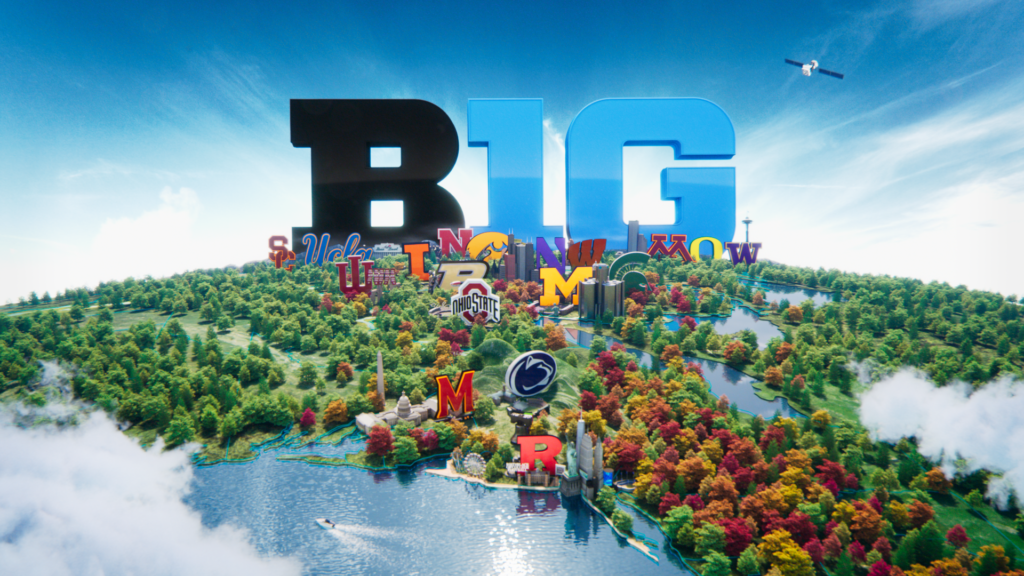

It’s one of the great head-scratchers in college sports: the Big Ten Conference now has 18 teams, stretches across two coasts and four time zones — and it’s still called the “Big Ten.” So what gives? Why hasn’t it become the Big 18, or picked some shiny new name to match its massive footprint?
The short answer: the name was never really about the number. Here’s the full story behind college football’s most gloriously inaccurate brand.
A Name Rooted in 1896
To understand the name, you have to go back — way back. The Big Ten is one of the oldest athletic conferences in America, founded in Chicago in 1896 as the Intercollegiate Conference of Faculty Representatives. It’s actually older than the NCAA itself.
It didn’t start with ten teams, either. The original lineup had seven Midwestern schools. As members came and went over the following decades, the league settled into a long, iconic era with ten core universities — and the “Big Ten” nickname stuck. By the time the classic ten-team roster solidified in the mid-20th century, the name was cemented in the American sports vocabulary.
Then the Expansion Started
For decades, ten was the magic number. Then college sports realignment kicked into gear.
Penn State joined in the early 1990s, pushing membership to 11. Nebraska came aboard in 2011, making it 12. Maryland and Rutgers followed in 2014, bringing the total to 14. And in 2024, the Big Ten pulled off its most dramatic expansion yet, adding former Pac-12 powers USC, UCLA, Oregon, and Washington — vaulting it to its current 18-team form and making it the largest conference in all of college athletics.
At every step, the conference had a chance to rename itself. At every step, it declined.
The Conference Tried to Change It Once — and Fans Revolted
Here’s the fun part: the Big Ten did once flirt with a rebrand. When Penn State joined and made it 11 teams, then-commissioner Jim Delany reportedly floated the idea, quipping that “now we’re the Big 11.”
Fans hated it. The backlash was immediate, and the conference quickly backed off. The lesson stuck: mess with the Big Ten name at your peril. The conference has essentially declared that it always has been and always will be the Big Ten, headcount be damned.
The Name Is a Brand, Not a Headcount
This is the real reason the name survives. Over nearly 130 years, “Big Ten” stopped being a description and became one of the most valuable brands in all of sports.
Think about what’s attached to that name: the Big Ten Network, a century-plus of tradition, rivalry games, packed student sections, and generations of fan memories. Walking away from all of that just to satisfy a math equation would be a marketing disaster. As the conference itself has pointed out, fans don’t buy merchandise or tune in because of a number — they do it because of what the Big Ten means to them.
“Big 18” Wouldn’t Even Be Accurate
Here’s a wrinkle that undercuts the whole rename argument: even 18 isn’t a clean number across the board.
Not every Big Ten school fields a team in every sport, and some sports include affiliate members from outside the 18 full-time schools. Men’s soccer, for example, has just 11 Big Ten teams. So if the goal of renaming were pure numerical accuracy, “Big 18” would be wrong in plenty of contexts anyway. The number was always going to be a moving target — which is exactly why leaning on tradition makes more sense.
The Clever “B1G” Compromise
The conference has actually had some fun with the whole situation. Its modern logo styles the name as “B1G” — sneaking a numeral right into the branding while sidestepping any specific count.
It’s a nod to the league’s own history of playful logos. The old pre-2011 Big Ten logo famously hid the number “11” in its negative space, a subtle wink acknowledging the extra team while keeping the beloved name intact. The “B1G” identity is the natural evolution of that same clever dodge.
The Bottom Line
So why is the Big Ten still called the Big Ten with 18 teams? Because the name was never a literal count — it’s a 129-year-old symbol of tradition, one of the most powerful brands in sports, and a source of deep pride for millions of fans. Changing it to match the roster would trade all of that away for the sake of arithmetic nobody was asking for.
The Big Ten has 18 teams and a name that says ten. And honestly? That contradiction has become part of the charm. You can read the conference’s own explanation if you want it straight from the source.