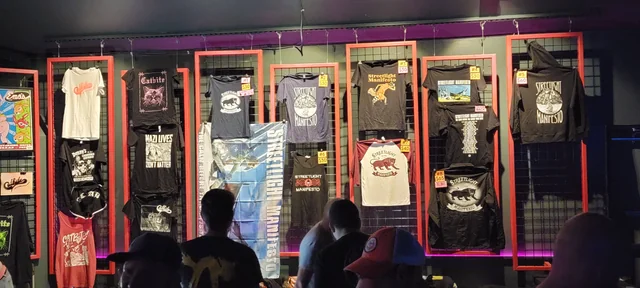

You just fought your way through traffic, paid for parking, and waited in line to get inside the arena. Then you spot it — the perfect Morgan Wallen hoodie, or maybe a Zach Bryan tee you’ll wear every weekend for the next five years. You grab the price tag and your stomach drops. Sixty dollars. Seventy-five. Sometimes more.
Sound familiar? If you’ve been to a country concert recently, you already know the sticker shock of the merch table. But before you write it off as pure greed, there’s a lot more going on behind the scenes. Let’s break down exactly why artist merch is so expensive — and where your hard-earned dollars are actually going.
1. Venues Are Taking a Massive Cut
Here’s the dirty little secret of the live music industry: when you buy a shirt at a concert, the artist doesn’t pocket all of that money. Not even close.
According to Money Digest, venues are now taking merch cuts of 20 to 35 percent off the top of every sale — sometimes even more depending on the city. Artist Julia Holter described it bluntly to Pitchfork, noting that venues are taking increasingly significant cuts despite having no involvement whatsoever in creating or funding the merchandise.
That means if you buy a $60 shirt, anywhere from $12 to $21 of that goes straight to the venue — before the artist sees a single cent.
Some artists have had enough. In December 2023, Falling In Reverse frontman Ronnie Radke refused to sell any merch at a Minneapolis show after the venue demanded a 25% cut. Musician Jeff Rosenstock went even further, posting a detailed spreadsheet on social media showing merch cut percentages across every tour stop — a post that racked up nearly 3 million views and prompted several venues to announce they’d give artists 100% of merch proceeds going forward.
The good news? A movement called #MyMerch (100% Venues) is pushing for artists to keep every dollar of their merchandise sales. It’s a step in the right direction, but widespread change hasn’t happened yet.
2. Streaming Pays Almost Nothing
It might surprise you to learn that even massive country artists aren’t getting rich off Spotify streams. The platform pays around $0.003 to $0.005 per stream — meaning an artist needs millions of plays just to generate meaningful income.
Even top-tier artists like Morgan Wallen, who finished 2025 as Spotify’s most-streamed country artist globally, and Zach Bryan, who set the record for the largest ticketed concert in U.S. history at Michigan Stadium, still rely heavily on merchandise and touring revenue to sustain their operations and teams.
For smaller and mid-level country artists — the ones playing theaters and mid-size venues — merch sales can be the difference between staying on the road and going home. That’s not an exaggeration. It’s genuinely how the modern music economy works.
3. Production Costs Are Higher Than You Think
Getting a merch item from concept to your hands involves a lot more steps — and a lot more costs — than most fans realize. According to Generation Riff, the process includes:
- Graphic design and licensing fees
- Manufacturing and printing (screen printing, embroidery, specialty inks)
- Quality materials (premium cotton, heavyweight fabric, specialty blends)
- Shipping merchandise to each tour stop
- Inventory management and storage
- Staffing the merch booth at every show
- Third-party vendor fees from merchandise companies
Artists who care about ethical production add even more to that cost. Take Chappell Roan, for example — her $40 t-shirts are made from 100% reclaimed waste cotton with a fully ethical North American supply chain. As Nylon Manila explains, that price reflects fair wages paid across the entire production chain, not just a markup for profit.
Even when artists don’t go the sustainability route, quality materials and small-batch production runs are simply more expensive than mass-market retail. A Walmart tee and a tour tee are not the same product.
4. The “Artist Premium” Is Real
Let’s be honest about one thing: part of what you’re paying for is the emotional connection you have with the artist. That Morgan Wallen hoodie isn’t just a hoodie — it’s a memento of a night you’ll remember forever, a conversation starter, a badge of belonging to a fan community.
That intangible value is factored into the price, and brands have known this for decades. When you attach a beloved name or image to a product, the perceived value goes up significantly — and the pricing follows accordingly.
It’s not unlike why a team jersey costs more than a plain athletic shirt. The logo, the identity, and the experience wrapped around it all carry real value to the buyer.
5. Country Artists Are Paying Big Touring Bills
Running a major country music tour is extraordinarily expensive. Stage production, lighting rigs, pyrotechnics, buses, crew salaries, catering, sound equipment — every night on the road costs tens of thousands of dollars, sometimes hundreds of thousands for stadium acts.
According to Generation Riff, while artists typically earn 75–85% of merchandise revenue, by the time all the associated costs are subtracted — vendor agreements, venue cuts, staffing — the actual margin is far thinner than it appears on paper.
Merch sales help subsidize the cost of putting on the kind of world-class shows country fans have come to expect. When Zach Bryan plays to over 112,000 fans at Michigan Stadium, the production behind that show doesn’t come cheap.
6. Unsold Inventory Is a Real Risk
Here’s something merch buyers don’t often think about: artists and their teams have to order and pay for merchandise upfront, before knowing exactly how much will sell at each stop. Ordering too little means losing sales. Ordering too much means eating the cost of leftover inventory.
That financial risk is built into the pricing model. The margin on each item sold has to cover the possibility that a portion of the inventory won’t move. It’s basic risk management — and it pushes prices up.
(Pro tip from the fans: if you can wait, merchandise from a completed tour often goes on sale through the artist’s official website at steep discounts once the road crew is trying to clear inventory.)
What Country Fans Can Actually Do
Understanding the economics doesn’t make handing over $65 any easier. But here are a few ways to get more out of your merch budget:
- Buy directly from the artist’s official online store. You’ll skip the venue cut entirely, and prices are often the same or lower than at the show.
- Shop after the tour ends. Artists frequently discount remaining inventory on their websites once touring wraps up.
- Follow artists on social media. Many — like Zach Bryan — are vocal when they think their merch pricing is too high and actively try to correct it.
- Support the #MyMerch movement. Raising awareness about venue merch cuts is one of the best ways to push for fairer pricing industry-wide.
The Bottom Line
Artist merch is expensive because the music industry is expensive — and increasingly tilted against the artists themselves. Venue cuts, streaming’s dismal payouts, production costs, and the inherent risks of touring all converge at the merch table. When you buy that Zach Bryan tee or Morgan Wallen hat at a show, you’re not just buying a piece of clothing. You’re directly supporting the artist in one of the only ways that actually reaches their pocket.
Is $60 for a t-shirt a lot of money? Absolutely. But the next time you’re at the merch table, know that the economics behind it are a whole lot more complicated — and a whole lot more unfair to artists — than most fans realize.