
If you spend any time around NASCAR fans, you will notice something remarkable. Decades after his death, Dale Earnhardt Sr. is still everywhere. His black No. 3 still appears on hats, T-shirts, bumper stickers, and tattoos from North Carolina to California. A 9-foot bronze statue of him stands in his hometown of Kannapolis, North Carolina, and young fans who were not even born when he died still stop to take photos in front of it. So what is it about this man that made him so enduringly loved? The answer is not simple, but it is worth exploring in full.
Who Was Dale Earnhardt?
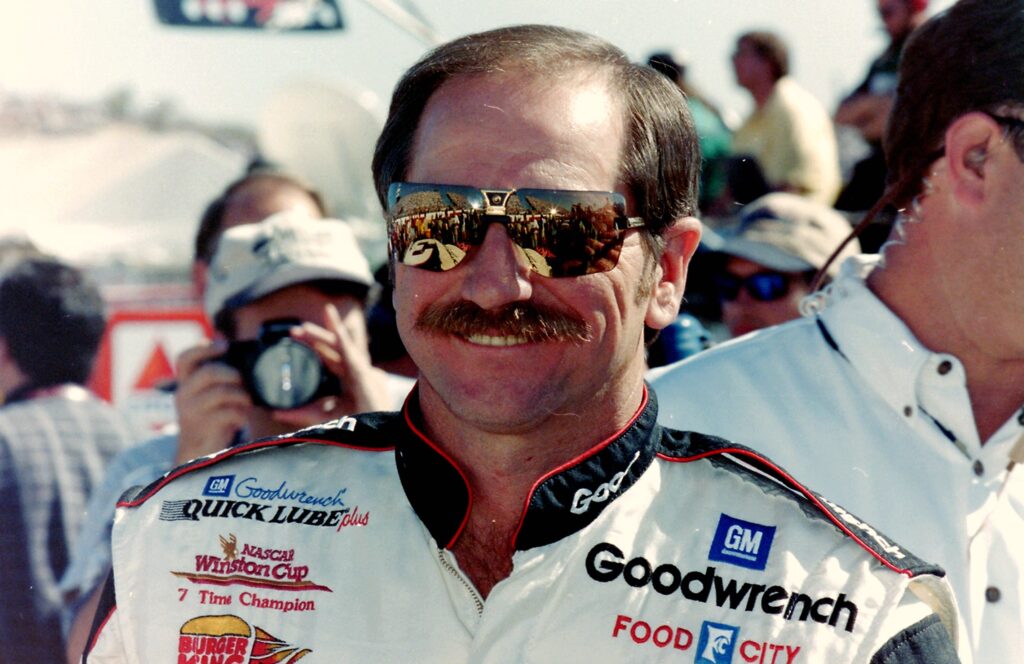
Dale Earnhardt Sr. was a NASCAR Winston Cup Series driver who won seven championships and 76 races across a career that spanned from 1975 to his death in 2001. He drove the iconic black No. 3 Chevrolet sponsored by GM Goodwrench for car owner Richard Childress, and he earned the nickname “The Intimidator” for an aggressive, take-no-prisoners driving style that thrilled fans and rattled rivals in equal measure. He died on the final lap of the 2001 Daytona 500 after a last-lap crash, leaving behind a legacy that has only grown larger with time.
Learn more about Dale Earnhardt’s career history at https://en.wikipedia.org/wiki/Dale_Earnhardt
He Was a Working Class Hero
Perhaps the single biggest reason Dale Earnhardt connected with fans so deeply is where he came from. He was a high school dropout who grew up in a working class family in Kannapolis, North Carolina. His father, Ralph Earnhardt, was a respected short-track racer, and Dale idolized him. Rather than taking a traditional path, Earnhardt clawed his way up through the sport on sheer determination, surviving financial struggles and early setbacks before making it to the highest level of NASCAR.
For millions of fans who worked hard jobs, lived paycheck to paycheck, and never had anything handed to them, Earnhardt was one of them. He did not come from money or privilege. He earned everything he had, and fans who lived similar lives understood that instinctively. His plain-spoken Carolina twang, his no-apology attitude, and his blue-collar swagger made him a genuine working class hero at a time when NASCAR was still the sport of the American South.
Read more about Earnhardt’s roots and rise to fame at https://www.motorsportmagazine.com/archive/article/august-2025/34/dale-earnhardts-nascar-legacy-the-long-shadow-of-the-man-in-black/
His Driving Style Was Unlike Anything Fans Had Ever Seen
Dale Earnhardt did not just race. He put on a show every single time the green flag dropped. His driving style was aggressive, fearless, and sometimes downright controversial. He would bump a competitor out of the way, sneak through a gap that did not look like it existed, or manufacture a pass on the final lap that left everyone in the grandstands on their feet. He was unpredictable in the best possible way, and that unpredictability made every race he entered appointment viewing.
Fans gravitated to that raw energy. They knew that when the No. 3 was on the track, something dramatic was likely to happen. Whether he was going to win, cause a crash, or somehow do both, Earnhardt delivered theater every weekend. Even fans who disliked him tuned in because they could not look away. That is a rare and powerful thing in any sport.
More on what made his driving style so captivating at https://www.wonderfulmuseums.com/museum/dale-earnhardt-inc-museum/
He Embraced His Villain Role and Made It Lovable
Most athletes try to win the crowd over by being likable and polished. Dale Earnhardt did the opposite. He leaned into being feared. He cultivated the image of the menacing dark force, the guy in the black car who was coming for you no matter what. He made no apologies for his aggression on the track and carried a smirking confidence that made fans either love him fiercely or love to hate him. Either way, they were watching.
What made this work was authenticity. Earnhardt was not playing a character. That was genuinely who he was. His confidence was real, his competitiveness was real, and his disdain for losing was real. Fans can always sense when a public figure is being manufactured, and with Earnhardt there was nothing manufactured about it. He was exactly what he appeared to be, and that honesty was magnetic.
He Represented the Spirit of True Rebellion
Dale Earnhardt was fiercely independent in every sense of the word. He built his own racing team, Dale Earnhardt Inc., into a powerhouse organization. He was the first driver to bring a souvenir trailer to the track and turned his brand into a business empire that Forbes estimated was generating over 19 million dollars per year by 1997, placing him behind only Michael Jordan and Tiger Woods in earnings among athletes worldwide. He eventually purchased a seat on the New York Stock Exchange and built a business empire that generated over 100 million dollars per year in revenue.
He did things on his own terms, rejected what he did not believe in, and never pretended to be something he was not. In a sport and a culture that valued authenticity and self-reliance above almost everything else, Earnhardt embodied those values completely. He was the embodiment of doing everything your own way, and that spirit resonated deeply with fans who shared those values.
He Was a Champion, and Champions Are Loved
At the end of the day, fans love winners. Dale Earnhardt gave his supporters an enormous amount of winning to celebrate. Seven Winston Cup championships tied him with Richard Petty for the most in NASCAR history at the time of his death. Seventy-six career victories. Countless memorable performances across every type of track. When the No. 3 rolled off the hauler, fans knew they had a legitimate shot at victory. That consistent excellence created a winning culture around Earnhardt, and fans wanted to be part of it.
His record also came with incredible range. He could win on superspeedways, short tracks, road courses, and intermediate tracks. He was not a one-trick specialist. He was a complete driver who could dominate almost anywhere, and that versatility only added to the legend.
His Death Turned a Legend Into an Icon
Dale Earnhardt Sr. was already one of the biggest names in American sports when he died. But his death on the final lap of the 2001 Daytona 500 transformed him into something beyond a sports star. It froze his legacy at its peak. There was no slow decline, no retirement that dulled the memories, no years of losing that softened the aura. He was gone while still a championship contender, still fierce, still the Intimidator.
Dale Earnhardt Jr. has reflected on this openly, saying he did not fully realize how big his father was until after he passed. He compared his father’s status to Elvis, describing him as someone who had transcended the person and become larger than life to millions of fans who believed he was indestructible. Death confirmed the legend in a way that retirement never could have, and the outpouring of grief from the NASCAR community and the broader public showed just how deeply he had touched people’s lives.
Read Dale Earnhardt Jr.’s reflections on his father’s legacy at https://www.yardbarker.com/nascar/articles/like_elvis_dale_earnhardt_jr_sister_reflect_on_dads_legacy_documentary_on_his_life/s1_13132_42193353
His Legacy Lives On Through His Family and the Sport Itself
The Earnhardt name did not die in Daytona. Dale Earnhardt Jr. carried the torch as NASCAR’s most popular driver for years after his father’s passing, and the connection fans felt to Dale Sr. extended naturally to his son. The No. 3 became a permanent fixture in NASCAR grandstands, and the black car with the silver lettering became one of the most recognizable images in American sports history.
Beyond his family, Earnhardt’s death fundamentally changed NASCAR safety standards for the better. The sport overhauled its approach to driver safety, mandating HANS devices and redesigning cars with better crash structures. Ironically, the man who was famously dismissive of safety equipment became the reason the sport got serious about protecting its drivers. His death saved lives, and that is part of his legacy too.
Even Formula One driver Daniel Ricciardo chose the number 3 as his permanent racing number in tribute to Earnhardt, showing just how far the legend spread beyond the borders of American motorsport.
Explore the lasting impact Earnhardt had on NASCAR safety and culture at https://www.nationalreview.com/2026/02/why-dale-earnhardts-legacy-still-matters/
Younger Generations Are Still Discovering Him
One of the most remarkable things about Dale Earnhardt’s legacy is that it keeps growing even as the years pass. Drivers who were not yet born when he died still speak about him with reverence. Current NASCAR stars have watched documentaries about him, heard stories from crew chiefs and team owners who worked with him, and absorbed the mythology of The Intimidator through the culture of the sport itself.
In 2025, Amazon released a four-part documentary series simply titled Earnhardt, introducing his story to a whole new generation of fans. The series gave viewers a look at the man behind the legend, and the response confirmed what NASCAR already knew: the fascination with Dale Earnhardt Sr. is not going anywhere.
Find out more about how Earnhardt’s legacy continues to inspire the next generation of NASCAR stars at https://www.profootballnetwork.com/nascar/dale-earnhardt-legacy-inspires-never-race/
The Bottom Line
Why is Dale Earnhardt so loved? Because he was real in a world that rewards performance. Because he was tough in a sport that demands toughness. Because he came from nothing and built everything. Because he drove with a fearlessness that made every race feel like it mattered. And because he was taken too soon, at the peak of his powers, on the sport’s biggest stage.
Twenty-five years after his death, Dale Earnhardt is not just remembered. He is still celebrated, still debated, and still felt in every corner of NASCAR. That is not nostalgia. That is a legacy. And there will never be another one quite like it.